Jahkeem Stewart’s Injury Tests USC’s DT Depth Before Oregon
The Trojans have no public diagnosis, return date or named replacement for one of their defensive stars. That uncertainty matters because Oregon arrives in Week 4 with a rebuilt offensive line ready to test every interior snap.
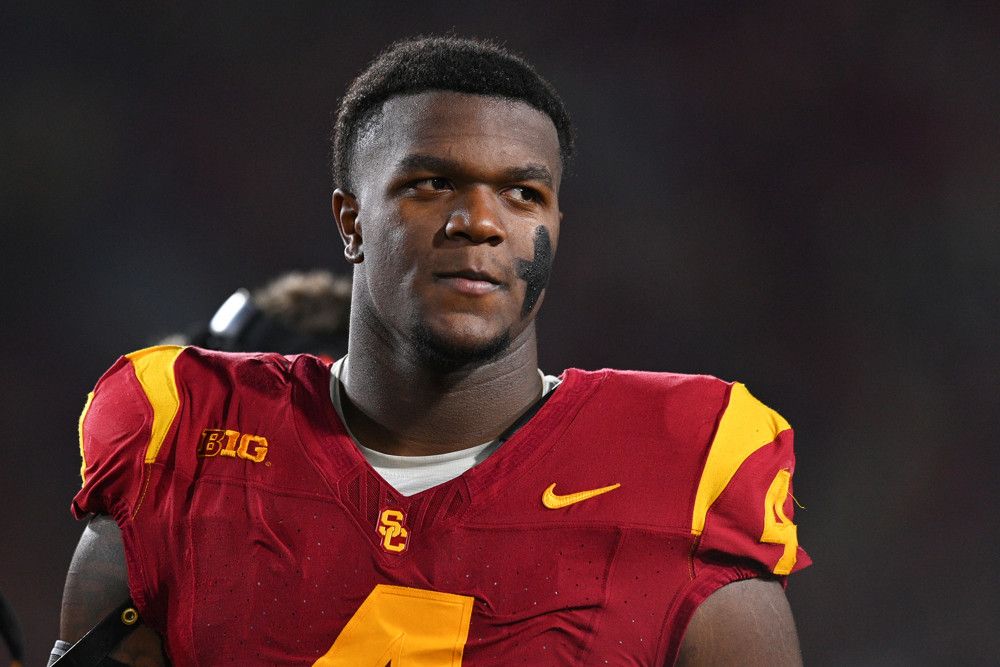 Photo: Brian Rothmuller/Icon Sportswire
USC may have to face Oregon without Jahkeem Stewart, and the timing leaves the Trojans with more questions than names up front. Logan Brown of Ducks Wire reported that Stewart is expected to miss USC’s opening games because of an injury. USC hasn’t announced the diagnosis, the number of games involved or a return date.
That puts the Oregon game in a narrow but serious lane. If Stewart is back by Week 4, USC gets a chance to settle the front before the matchup that matters most. If he isn’t, the Trojans will need somebody else to control gaps against an Oregon offensive line that has been rebuilt. Nobody outside the building has been told who that somebody is yet.
USC’s interior without Stewart
Stewart has been identified as one of USC’s defensive stars. That matters less as a label than it does as a snap count. A star defensive tackle affects where the center sets the protection, how quickly the guards can leave the line of scrimmage and whether USC’s linebackers see a clean path to the ball.
“USC can survive Stewart’s injury by Week 4 if the replacement snaps become real roles before Oregon arrives.”
From the storyTake Stewart out, and those jobs move to players who may have expected fewer early snaps. They don’t need to become Stewart. They need to hold the line long enough for the rest of the defense to play downhill. That sounds ordinary because it is. Interior defense is full of ordinary snaps that become very expensive when the tackle loses his gap.
The report doesn’t identify Stewart’s replacement in the lineup. So there’s no responsible way to name the next man or pretend USC already has a settled two-man pairing. The first useful answer will come from who takes the opening defensive tackle snap, who is still there on third down and whether the staff keeps one player on the field or spreads the work across several bodies.
That last choice carries a tradeoff. One tackle playing heavy minutes can give USC cleaner communication and a steadier front. A wider group can keep legs fresh, but every new pairing has to recognize the same blocks and fit the same run lane. Oregon doesn’t need a dramatic weakness. It needs one crease, one late exchange or one tired tackle who gets moved a yard farther than he should.
The best version of this defense still exists if Stewart’s absence ends before Oregon. USC can use the opening games to find the right combination, teach the calls and learn which interior player can stay firm when the offense changes the picture. Stewart’s return would then add a proven piece instead of asking the front to solve its biggest problem in real time.
The worse version arrives if the early replacement snaps turn into emergency duty in Week 4. Then USC has to defend Oregon with a thinner group while also asking its linebackers to sort through more traffic. The front seven can survive one unsettled spot. It gets much harder when that spot changes the way every player behind it fits the run.
Oregon will test the first step
Oregon’s rebuilt offensive line gives this matchup a clean point of attack. The Ducks can test whether USC’s interior defenders win the first contact, stay square and keep the center of the defense from folding.
That doesn’t require Oregon to run the same play over and over. A gap-control front asks each tackle to occupy his space without chasing the ball too early. If USC does that, the linebackers can make the play from behind the defensive line. If the tackle gets washed out, the linebacker has to choose between filling late and protecting the next gap. Oregon’s rebuilt group gets to find out which answer shows up.
There’s credit due to the Ducks here. Rebuilding an offensive line doesn’t automatically mean it will play poorly, and Week 4 gives Oregon a useful opponent for measuring the work. USC’s interior issue isn’t a gift wrapped in advance. The Ducks still have to move people and protect their quarterback.
USC gets the same respect. Stewart’s absence doesn’t erase the rest of the defense, and the Trojans have time to prepare before the Oregon meeting. The calendar gives them opening games to sort out the order of the tackles, the snap shares and the players who can handle long drives without losing their gap.
But calendar time only helps if the staff uses it on the right decisions. USC doesn’t need a perfect replacement in September. It needs to know whether the replacement can play early downs, whether another tackle can handle passing situations and whether the group can communicate when Oregon shifts the formation. Those are different jobs. One player may not cover all of them.
That’s why the injury timeline matters more than the injury headline. A short absence gives USC a rehearsal. A longer one forces the Trojans to build a new interior plan before a conference opponent gets a full afternoon to attack it.
Three versions of the Oregon matchup
If Stewart returns in time to practice and play, USC’s best path is straightforward. Stewart handles the demanding interior snaps, the other tackles stay fresh, and the Trojans can keep their linebackers clean enough to make Oregon pay for missed blocks. The question then shifts from survival to conditioning. Can Stewart carry his normal workload after missing the opening stretch?
If he misses Oregon but USC finds a dependable pairing in the opening games, the Trojans can still play this without panic. The replacement doesn’t need a highlight reel. He needs to avoid giving Oregon free movement inside. A two-tackle group that loses no easy gaps can keep the game on schedule and let USC’s edge defenders do their work outside.
If Stewart misses the game and the interior snaps remain scattered, Oregon has the clearest invitation. The Ducks can run at the weakest pairing, return to it after a substitution and force USC to prove that its depth is more than a list of bodies. Defensive tackles don’t get to hide when the offense knows which gap it wants.
The strongest case for USC depends on Stewart being available or on another tackle claiming the job before the Ducks arrive. The weakest case begins when USC is still rotating because nobody has earned trust. The likely middle ground is a front that can function, but only if the tackles win early downs and avoid making the linebackers clean up every block.
Around the matchup
The public information stops at the injury report. There is no diagnosis, no return date, no game total and no replacement name. That limits the prediction, but it doesn’t erase the football question. USC will have to make its interior decision with actual snaps, not preseason labels.
The opening games should reveal three things. Which defensive tackle starts. Which one remains on the field when the offense goes heavy. Which one can hold his ground late in a drive. Those details will tell you more than a camp description ever could.
Oregon’s offensive line gets its own test at the same time. If the Ducks can create movement inside, USC’s linebackers will spend the afternoon reacting. If USC’s tackles stay square, Oregon will have to win somewhere else.
USC can survive Stewart’s injury by Week 4 if the replacement snaps become real roles before Oregon arrives. The Trojans won’t survive it cleanly if the interior remains a weekly audition. Watch the first Oregon series for the pairing next to the center of the defense and the second-half snap count beside it. That’s where the Trojans’ answer will show up.
01 · The Open QuestionsQuestions to Be Answered
Will Jahkeem Stewart be available for Oregon?
USC has announced no diagnosis, number of games involved or return date, while Stewart is expected to miss the opening games. If he returns in time to practice and play by Week 4, he can handle demanding interior snaps. If he does not, USC will need a replacement plan against Oregon’s rebuilt offensive line.
Can USC establish a dependable defensive tackle pairing before Week 4?
No replacement has been publicly named, and the opening games must reveal who starts, who remains on the field when the offense goes heavy and who can hold ground late in a drive. A dependable pairing can avoid easy gaps; scattered snaps would give Oregon a pairing to target.
Can Oregon create movement inside?
Oregon’s rebuilt offensive line gets a direct test against USC’s unsettled interior. If the Ducks move tackles off their gaps, USC’s linebackers will have to react through more traffic. If USC stays square, Oregon will have to win somewhere else, making the first series and second-half snap count useful tells.
02 · The Watch ListWhat to Watch Next
Who takes the opening defensive tackle snap?
The report does not identify Stewart’s replacement. The first useful answer comes from who starts inside and whether USC has a settled pairing.
Who stays in on third down?
USC needs to learn whether one tackle can handle passing situations or whether the staff spreads the work across several bodies.
Can USC’s tackles hold early-down gaps?
If the interior stays square and avoids free movement inside, USC can keep its linebackers clean enough to play downhill.
Does Oregon find the weakest pairing?
If USC’s interior snaps remain scattered, Oregon can run at the weakest pairing, return after a substitution and force the depth to prove itself.