 Michigan
Michigan’s 2026 Range Runs Through Bryce Underwood and the Run Game
Kyle Whittingham has Michigan pointed in the right direction, but his formula leaves little room for an ordinary offense. A stronger rushing attack and reliable hidden-yardage work could move the Wolverines toward 11 wins. If both fall short, eight is close enough to matter.
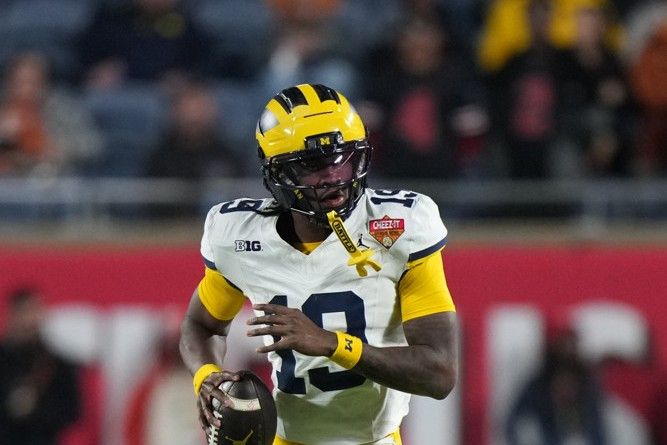 Photo: Peter Joneleit/Icon Sportswire
Michigan's 2026 season starts with Bryce Underwood, but it does not end with him. His growth, the running game's ability to keep the offense out of bad downs, and Michigan's work in hidden-yardage situations will decide whether the Wolverines reach 11 wins or settle closer to eight.
Kyle Whittingham has already laid out what Michigan needs. Underwood must play well and protect the football. The running game must hold up. The defense must be outstanding, and special teams must be highly reliable. That is not a list meant to fill airtime. It is a narrow path for a team asking a young quarterback to improve without making him solve every possession himself.
Underwood’s camp progress has to survive pressure
Whittingham described Underwood as faster in the offense, more decisive, and moving upward through fall camp. Offensive coordinator Jason Beck saw steadier work than the uneven results Underwood produced in the spring.
“Hidden yardage is rarely one giant play. It is the collection of small losses that leaves no room for a quiet game.”
From the storyThat change matters most after the first answer disappears. A clean read on first down helps. The next decision after pressure arrives tells you more. Underwood's footwork, pocket presence, decisions, and ball security all have to carry from practice into third down and late-game snaps.
Better pocket movement can buy the offense another beat. Faster decisions can keep a defense from turning a manageable down into a pass-rush situation. Protecting the football can preserve the field position Michigan's defense worked to earn.
Whittingham entered camp unsure what to expect from his first Michigan roster. With about two weeks left before the opening game, he had grown more confident. That confidence does not identify a new starter, a new injury answer, or a season target. It does show that the staff believes the daily work has improved.
Saturday will ask for something different. A quarterback can be steady in controlled periods and still force a throw after protection breaks down. He can look decisive until a defense disguises coverage. Michigan's first game will put Underwood in the spot where one mistake demands a response instead of another clean rep.
If Underwood handles that moment without turning one mistake into three, Michigan's range moves quickly toward the better end. If his progress stays inside the practice setting, the running game, defense, and special teams all have to cover more ground.
Michigan needs a rushing answer on ordinary downs
Whittingham placed the running game beside quarterback play, not below it. Michigan cannot ask a developing passer to rescue every possession, especially when a defense knows the offense has no dependable way to stay on schedule.
A credible run threat changes the picture before the snap. It can create cleaner downs, improve field position, and reduce the number of throws Underwood makes while under pressure. It also gives Michigan an answer when his first read is covered.
That answer does not need to produce a highlight every quarter. A short run on a difficult down can preserve a drive. A strong run late can protect a lead and keep the defense from carrying the entire afternoon. Those plays make Underwood's job survivable.
Dependability cannot be declared into existence. One strong rushing afternoon will not stop defenses from loading the box the following week. If Michigan cannot create enough threat on the ground across games, opponents can force Underwood into the exact decisions the staff is trying to clean up.
The cost of a turnover changes with the run game. With balance, a bad throw can be a single lost possession. Without it, the same mistake can produce a short field and another obvious passing down. Michigan's rushing attack will not decide every game by itself. It will decide how often Underwood gets to play quarterback instead of emergency quarterback.
Defense and special teams have to win the field
Michigan's defense has to cover the stretches when the offense is still learning. Special teams have to protect field position when the offense cannot. Those jobs meet at the same point: fewer possessions where Michigan needs a young quarterback to be perfect.
Whittingham's demand for an outstanding defense carries more weight than a generic call for good play. The defense can erase a poor down before it becomes a crisis. It can force a punt, create a longer field, or hold an opponent to less than the mistake deserves. Michigan does not need those plays to replace Underwood's growth. It needs them to keep that growth from becoming a weekly emergency.
Special teams can steal a game Michigan otherwise would not win because hidden yardage changes where every possession begins. A return, a punt, a kick, or a clean operation can turn a long field into a manageable one. One ordinary mistake can quietly give that edge away. Whittingham included special teams alongside the quarterback and defense for a reason.
Michigan can win the field-position fight while Underwood grows into the offense. The defense can make a narrow lead matter. Special teams can shorten the distance between a good drive and points. The running game can keep Underwood from throwing into every late-down pressure look.
The other path comes through accumulation. One extra defensive conversion, a few lost special-teams yards, and an offense starting behind schedule can leave Underwood carrying the whole afternoon. Hidden yardage is rarely one giant play. It is the collection of small losses that leaves no room for a quiet game.
The nine-win call sits between the extremes
Michigan's 11-win version does not require Underwood to be finished. It requires him to play faster and protect the ball, the running game to provide a repeatable answer, the defense to keep ordinary offensive mistakes from becoming points, and special teams to steal enough field position for a close game or two.
Eight wins arrives through a different chain. Underwood's practice progress does not survive pressure. The run game works in flashes but cannot keep defenses honest. Michigan gives away field position, then asks its quarterback to make up the distance. The defense can still play well while the season slides because too many games become rescue missions.
Whittingham's growing confidence points toward the better version, but it does not erase the risk. No depth-chart decision, injury update, or tactical change settles the question in advance. Michigan has two weeks before its next game, enough time for more work but little value in progress that remains theoretical.
The rushing attack may matter almost as much as Underwood's arm. Not because Michigan can win by removing the quarterback from the equation. A repeatable run threat determines whether his mistakes stay small. That is how a young passer develops inside wins instead of being asked to manufacture them.
The prediction is nine wins. A steady Underwood and a run game that keeps important downs manageable pull Michigan toward 11. If either piece leaves the defense and special teams cleaning up every mistake, eight is much closer.
The first game will put the forecast on the field: Underwood's decisions after pressure, the run game's ability to stay on schedule, and the field position created by special teams. Michigan is a nine-win call because those three areas can support Underwood, but only if the first two arrive together.
01 · The Open QuestionsQuestions to Be Answered
Will Underwood’s camp progress hold up once the first read disappears?
Michigan’s better outcome depends on Underwood playing faster, protecting the ball and responding after pressure rather than turning one mistake into three. The first game supplies the earliest test, especially on third down and late-game snaps after protection breaks down or coverage changes.
Can Michigan build a repeatable rushing answer across games?
The run game must do more than produce one strong afternoon. If it keeps ordinary downs manageable, Underwood gets cleaner throws and fewer pressure situations; if it works only in flashes, opponents can load the box and force him into the decisions the staff is trying to clean up.
Can defense and special teams keep small offensive mistakes from becoming points?
Michigan’s defense and special teams must cover stretches while the offense is still learning. The first game will show whether punts, returns, kicks and defensive stops create longer fields for opponents, or whether hidden-yardage losses leave Underwood carrying an entire afternoon.
02 · The Watch ListWhat to Watch Next
Can Bryce Underwood respond after pressure arrives?
Watch his decisions, footwork and ball security after protection breaks down or a defense disguises coverage. Third down and late-game snaps offer the clearest test of whether camp progress carries into a game.
Does the run game keep Michigan on schedule?
The tell is whether Michigan can get short gains on difficult downs and avoid making Underwood rescue every possession. A repeatable ground threat can keep defenses from loading the box and forcing obvious passing situations.
Is Michigan winning the field-position fight?
Track where possessions begin and whether returns, punts, kicks and clean operation create manageable fields. A few lost special-teams yards and an extra defensive conversion can turn the offense into a rescue operation.