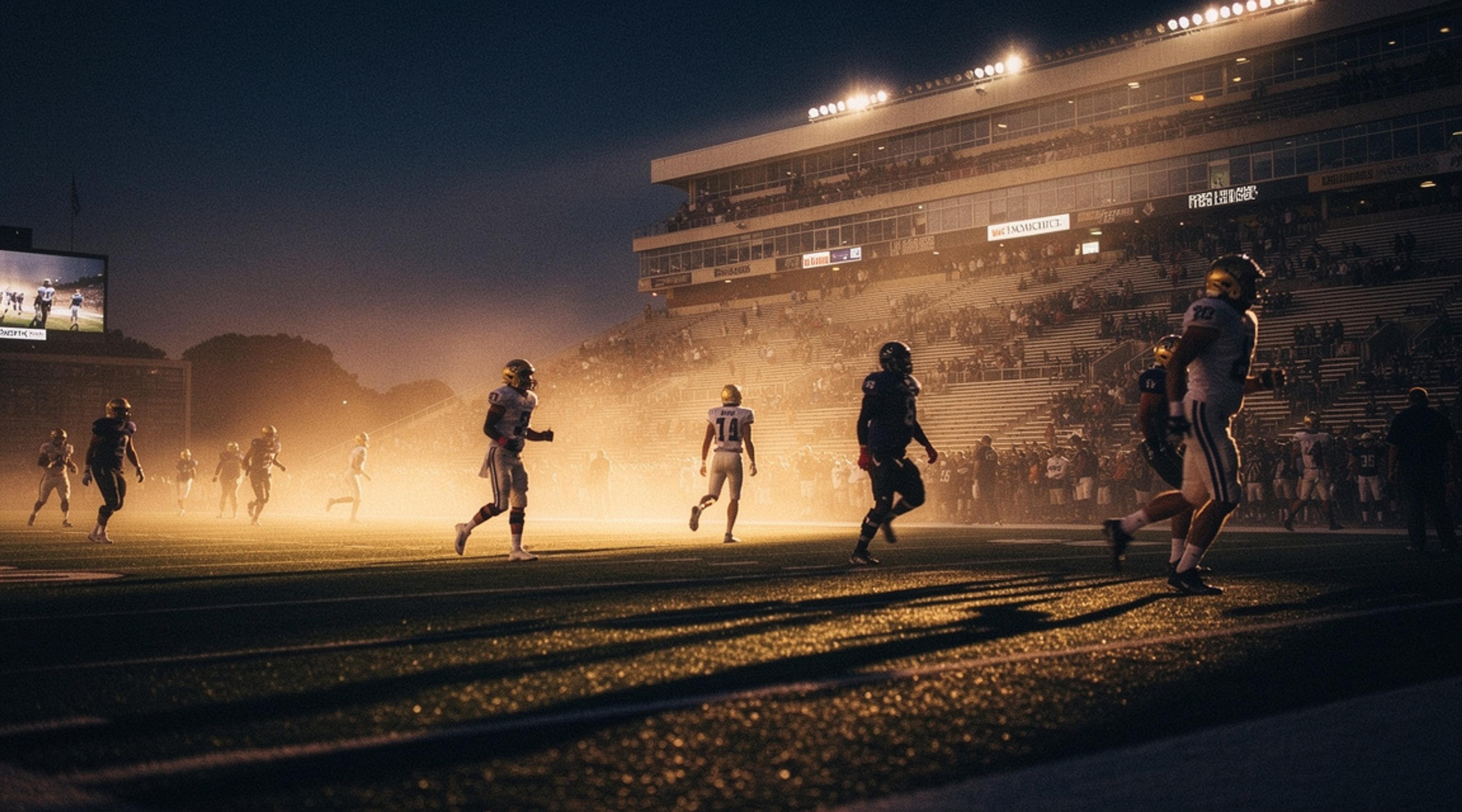
Notre Dame 2026: CJ Carr’s breakout, the receiver test, and an 11–1 path
Notre Dame has the defense, returning production, and schedule to reach the playoff. The season turns on whether its pass catchers can win one-possession games and whether the Irish can prove they beat big teams.
Notre Dame is built for an 11–1 regular season and a serious playoff run, but the margin is sitting in the pass-catcher room. The defense should carry the floor, CJ Carr should raise the ceiling, and the receiver group will decide whether this is a playoff team or a team that merely arrives there.
I don't think I've ever seen a coming 5-year stretch where you could feel better about the trajectory and direction of Notre Dame football than I feel sitting in 2026, looking out towards 2030 and 2031. “I don't think I've ever seen a coming 5-year stretch where you could feel better about the trajectory and direction of Notre Dame football than I feel sitting in 2026, looking out towards 2030 and 2031.”[/PULLQUOTE] Notre Dame returns the most production in the country, has a workable schedule, and has handled the disappointment of missing the playoff the right way. That gives Marcus Freeman a high floor. It doesn't give him a title.
CJ Carr changes the ceiling
CJ Carr is the obvious breakout player because the quarterback position magnifies every improvement around him. He's entering year three under Mike Denbrock, and Todd McShay called him the best passer at the Manning Passing Academy. The claim isn't that Carr needs to become a finished product overnight. It's that a year-one to year-two jump at quarterback can turn good drives into touchdowns.
“CJ Carr's got to be the guy you circle. Very, very easy.” Carr may have the best raw passing traits in the sport. I can see the Heisman conversation forming quickly, but the more immediate test comes on third down when Notre Dame needs a throw instead of another safe answer.
That matters because the running back room isn't a panic spot. Chris Williams, Nolan James, and Kedren Young give Notre Dame enough talent to keep the run game from becoming a weakness after Jadarian Price and Jeremiah Love. Anias Williams could even push toward 1,000 rushing yards if the pass game isn't electric, because Notre Dame's style gives the backs room to carry the offense.
The defense gives Notre Dame room to be imperfect
Notre Dame's defense is already a top-12 unit, and it finished fourth in the FBS at shutting down opposing passing attacks. Leonard Moore gives the Irish the best corner in the sport, the safety duo is strong, and every linebacker returns. Four upperclassmen in that linebacker group could start almost anywhere.
The defensive line is the relative question. That's a compliment disguised as a problem. When the linebackers and corners are that good, the line becomes the spot that gets compared against an unfair standard. The pass rush could still be excellent. If it is, Notre Dame can survive a quiet stretch from the offense because the defense can squeeze possessions and force long-yardage downs.
Eight opposing offenses finished 99th or worse nationally last year. That schedule won't make the defense work every Saturday, but it can keep the Irish fresh and let Carr grow without asking him to win every game in September.
The receiver room owns the playoff test
The pass catchers are where the season can turn from good to severe. Faison, Great Hesh, Myles Graham, and Quincy Porter all have traits. The question is whether one of them becomes a true receiver one instead of a collection of receiver twos and threes.
“You sit there and wonder to yourself, is there a true bonafide wide receiver one in that group? Or are we just looking at a bunch of guys who would be good complimentary pieces, wide receiver two, three types without a wide receiver one? And does that bite us come playoff time?” That isn't a concern about the room's existence. It's a concern about the room's answer when an opponent takes away the first read and the Irish need 18 yards with the game tightening.
Ian Book could change the shape of that issue. He's a 6-foot-6, 245-pound five-star freshman tight end who figures to play immediately. If he becomes a major target, Notre Dame doesn't need to force a star receiver into a role he hasn't claimed. The tight end can become the answer against teams that press the outside and dare Carr to throw into the middle.
That is also where Miami, BYU, and SMU matter. Notre Dame could be a 17-point favorite in nine of its 12 games, and the schedule ranks seventh-easiest in the internal model. The danger isn't surviving the schedule. It's reaching a one-possession playoff game without a trusted chain-moving target.
The big-game argument needs a new answer
I respect the argument against Notre Dame. The Irish had two close regular-season losses last year, and the critics say the path to the national title was too forgiving before Ohio State flushed them out. The fastest way to end that debate isn't a better explanation of the path. It's winning the games in front of this team.
“If you wanted to be a hater here, and trust me, there are a bunch of them in my inbox, and you wanted to sort of, you know, like pick apart Notre Dame, you could say they don't win big games.” The defense and schedule should get Notre Dame to the playoff. Carr and the pass catchers have to keep it there when the opponent can match the Irish up front.
The best case is 12–0 and the No. 1 seed. The worst case is 9–3, which would require Notre Dame to lose more of the Miami, BYU, and SMU stretch than the roster should allow. My most likely result is 11–1, with the Irish solidly in the playoff.
Notre Dame's 2026 case is real because the defense can erase mistakes, Carr can create explosive answers, and the schedule gives the roster time to settle. The title case depends on one thing: a pass catcher who wins the late down before the late down wins the game. Watch the November Miami game for that answer.
Watch the Full Episode
Articles are drafted from Josh Pate's College Football Show under the site's editorial standards and monitored by the editorial team — corrections are timestamped, never silent.